

Accessible Northern Territory
Tropical wetlands and ancient desert, two halves of one territory with 1,500 km between them. This is not a destination built for spontaneity: heat, distance and terrain shape every itinerary. Planned properly around conditions rather than just locations, it becomes not only accessible but deeply rewarding.
Getting there and getting around
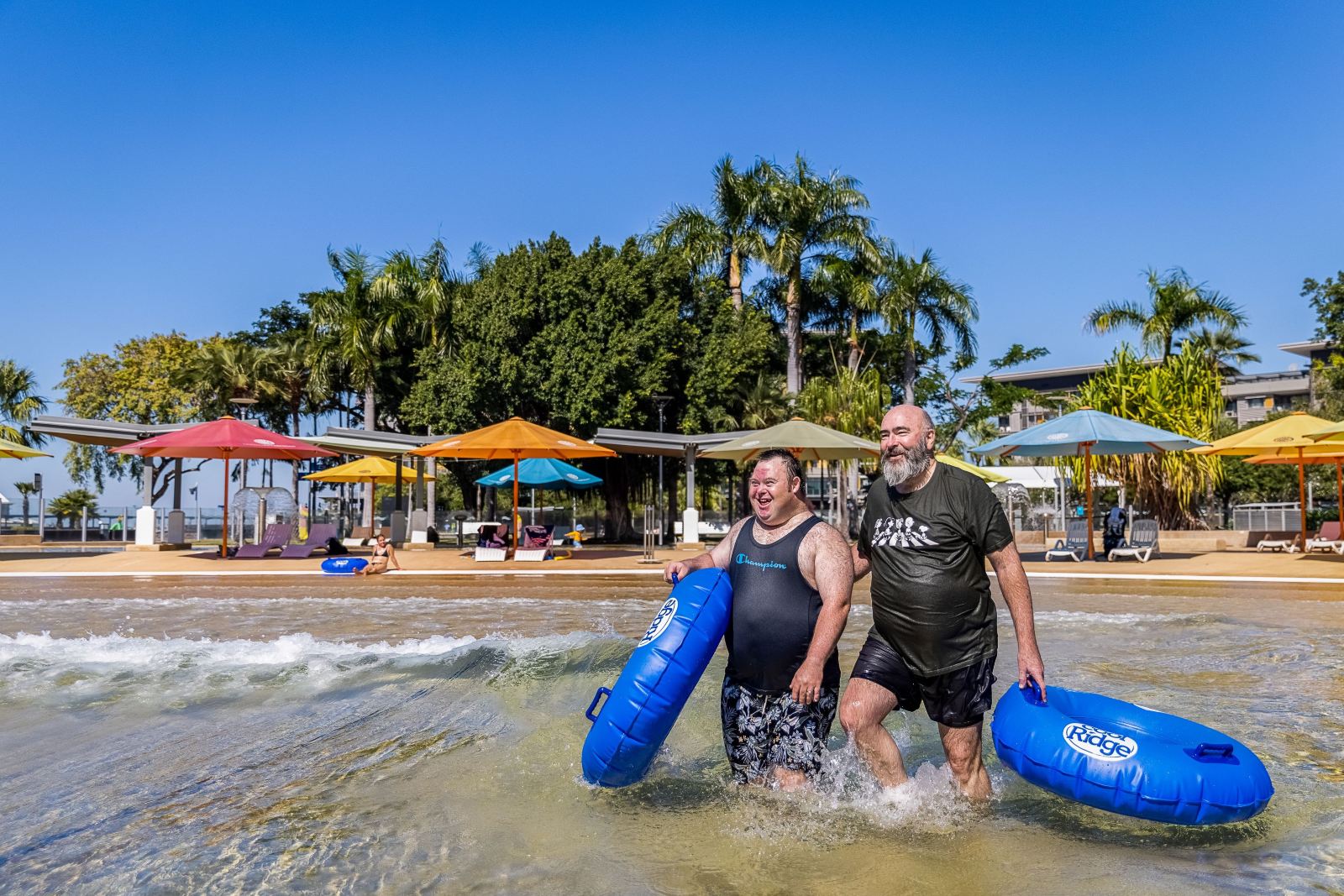
Two halves, two gateways
Darwin serves the tropical Top End; Alice Springs and Ayers Rock serve the Red Centre. They are nearly 1,500 km apart, so most itineraries fly between them rather than driving, and we plan them as two distinct trips joined by a flight.
Guided touring is often the accessible option
Many key attractions are designed to be reached in guided formats, and national parks tend to have centralised visitor hubs with facilities. Tour choice is an access decision here, so we verify vehicle setup and pacing before booking.
Heat is the primary constraint
Humidity and UV affect energy, mobility and comfort more than distance does. We design around daily conditions: early starts, shaded stops, air-conditioned recovery and genuine rest time built into every day.
Facilities are spaced further apart
The gap between reliable toilets and rest stops is a real planning input in this part of Australia. We check that facilities on your route suit your specific needs before the day is locked in.
The Northern Territory's regions, by access personality
Start where the access matches your needs. Region guides are being verified and published progressively.
Two very different halves: the tropical Top End, and the Red Centre nearly 1,500 km south.
Darwin
Small, relaxed and surprisingly manageable, with accessible waterfront promenades, dining and cultural spaces. The natural base for arrival and recovery days.
Plan Darwin daysLitchfield National Park
The best starting point for Top End nature: closer to Darwin, shorter travel times, and some accessible boardwalks and viewing areas.
Plan LitchfieldKakadu National Park
One of Australia's most significant landscapes, best experienced through guided or carefully paced itineraries with structured visitor hubs.
Plan KakaduKatherine & Nitmiluk
Gorge country reached by boat rather than on foot, which makes the scenery available without the climb.
Plan KatherineArnhem Land
Permit country and profound First Nations culture, only ever visited in supported, guided formats with proper arrangements.
Plan Arnhem LandUluru & the Red Centre
The base walk's flat sealed sections, sunset viewing areas and desert light, with heat planning at the centre of every day.
Plan the Red CentreAlice Springs
The Red Centre's service town, with galleries, desert parks and cultural experiences at a walkable scale.
Plan Alice SpringsVerified the Northern Territory highlights
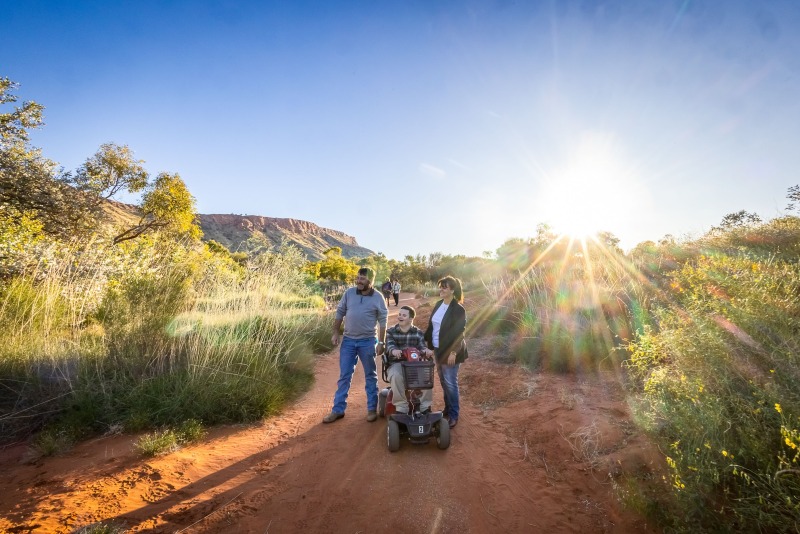
Alice Springs Desert Park
Graded trails through the West MacDonnell foothills bring desert country, birds of prey and nocturnal species within reach at your own pace. Late afternoon is the kindest time to be out here.
- Graded trails through the park
- Seated wildlife presentations
- Late-afternoon timing to beat heat
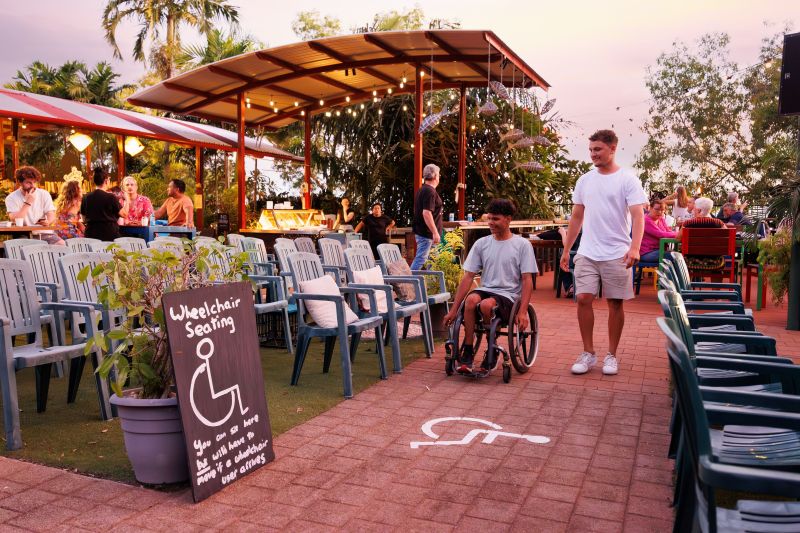
A night at the Deckchair Cinema
Films under the stars on the harbour edge, with a marked wheelchair seating area and level access across the site. A low-demand evening that makes a good counterweight to a big touring day.
- Marked wheelchair seating area
- Level access across the site
- Dry season season, April to November
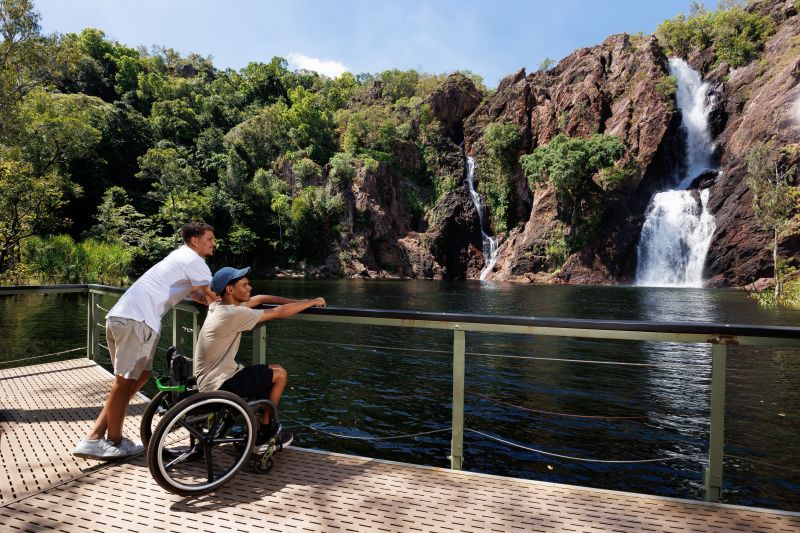
Wangi Falls, Litchfield
A level viewing deck brings you right to the water at one of the Top End's great swimming holes, and the magnetic termite mound boardwalk nearby is step-free too. Closer to Darwin than Kakadu, with shorter travel times.
- Level deck at the falls
- Step-free termite mound boardwalk
- Shorter travel from Darwin
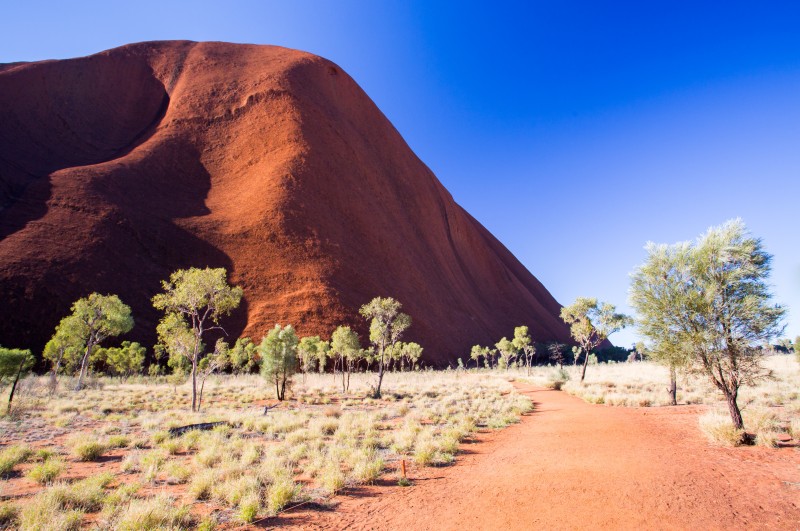
Uluru, up close
Flat, hard-packed sections of the base walk bring you right to the rock face, where the scale and the detail land in a way no lookout delivers. Early morning is the time, before the heat and the crowds.
- Flat, hard-packed path sections
- Accessible sunset viewing areas
- Early-morning timing arranged
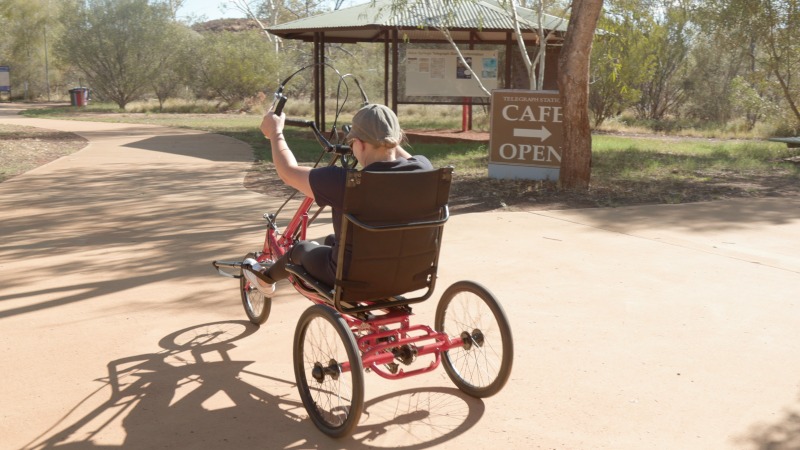
Alice Springs Telegraph Station
Sealed paths link the historic station precinct to town, and adaptive handcycles turn the route into a ride rather than a walk. Heritage buildings, river red gums and desert light, at whatever pace suits.
- Sealed paths through the precinct
- Adaptive handcycle hire nearby
- Cafe and facilities on site
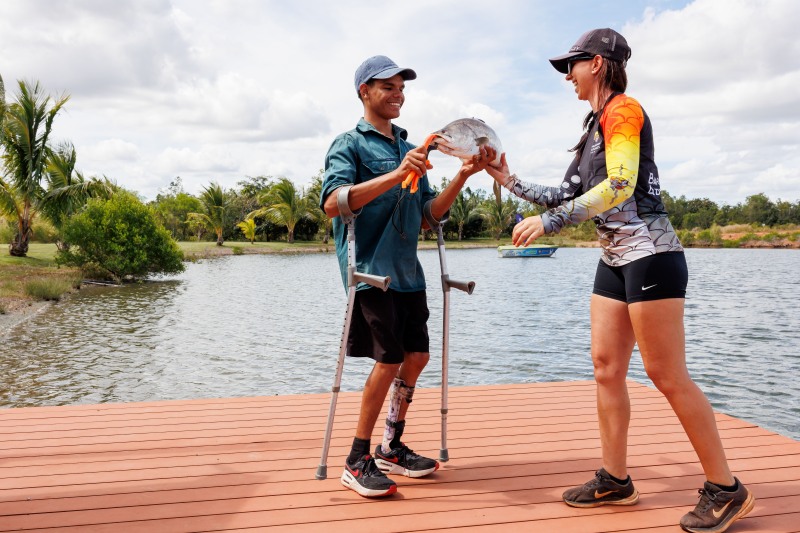
Barramundi fishing, Darwin
A level deck, gear that is handed to you, and a very good chance of landing a barramundi. Guided, hands-on and genuinely fun, with no scrambling over rocks or boats to get there.
- Level deck, no boat transfer
- Gear and guidance provided
- Catch is close to guaranteed
When to go
Dry season, May to October
This is the window that makes Top End access work: cooler, more predictable and considerably easier for movement, facilities and touring. If you have flexibility on timing, use it here.
Build-up and wet season
October to November is hot, humid and demanding. December to April brings the wet, with limited access in some areas and high humidity throughout. Choosing the right timing improves both comfort and feasibility more than any other decision.
What a the Northern Territory trip looks like
Sample shapes, rebuilt around every traveller. Ask us for current pricing around your needs.
Top End essentials · 6 days
Red Centre · 5 days
What makes it work
Itineraries designed around daily conditions rather than just locations, air-conditioned accommodation confirmed as essential rather than optional, tour operators verified for vehicle setup and pacing, facilities checked along every route, and genuine recovery time built into every single day. One itinerary, one point of contact.
See more itinerary shapesthe Northern Territory questions we answer most
When should I visit the Northern Territory?
The dry season, May to October, is the window that makes access work: cooler, more predictable and considerably easier for touring and facilities. The wet season brings high humidity and limits access in some areas.
Is Uluru accessible?
Sections of the base walk are flat and sealed, and there are dedicated accessible sunset viewing areas. Heat planning and early timing matter as much as the surface itself.
Should I visit Kakadu or Litchfield?
Litchfield is usually the better starting point: it is closer to Darwin, travel times are shorter, and it has accessible boardwalks and viewing areas. Kakadu is more significant and more demanding, and works best with guided, carefully paced structure.
Can I combine the Top End and the Red Centre?
Yes, and most travellers fly between them rather than driving. They are nearly 1,500 km apart, so we plan them as two distinct trips joined by a flight rather than one continuous road journey.
Do I need guided tours?
Often they are the most accessible option, because many key experiences are designed around guided formats and national parks have centralised visitor hubs. We verify vehicle access and pacing with the operator before booking.
Official the Northern Territory access resources
Territory and national park planning resources, useful alongside this guide.
Northern Territory accessibility information (opens in new tab)Before you lock anything in
Whoever you book through, these are the details worth confirming rather than assuming.
- Daily temperature and humidity for your dates
- Accommodation cooling and bathroom layout
- Tour vehicle setup and toilet stop spacing
Travel advisor or tour operator?
Net rates, the Itinerary Studio and our Destination Guide & Supplier Pack are ready for you.