

The Accessible Frontiers mission rolls south again! Sam and Charlie have spent this leg based in and around nipaluna/Hobart, putting the city’s convict history, its most eccentric museum, its waterfront, and its iconic mountain through the full accessibility audit. Some sites were built centuries before ramps were ever considered, others are brand new and purpose-built for inclusion — here’s how they all stack up.
Want to see the “Reality Check” in action? Head over to our Instagram for the full gallery of Sam’s “reality check” photos and videos from the Tassie road! 📸
1. Cascades Female Factory (South Hobart)
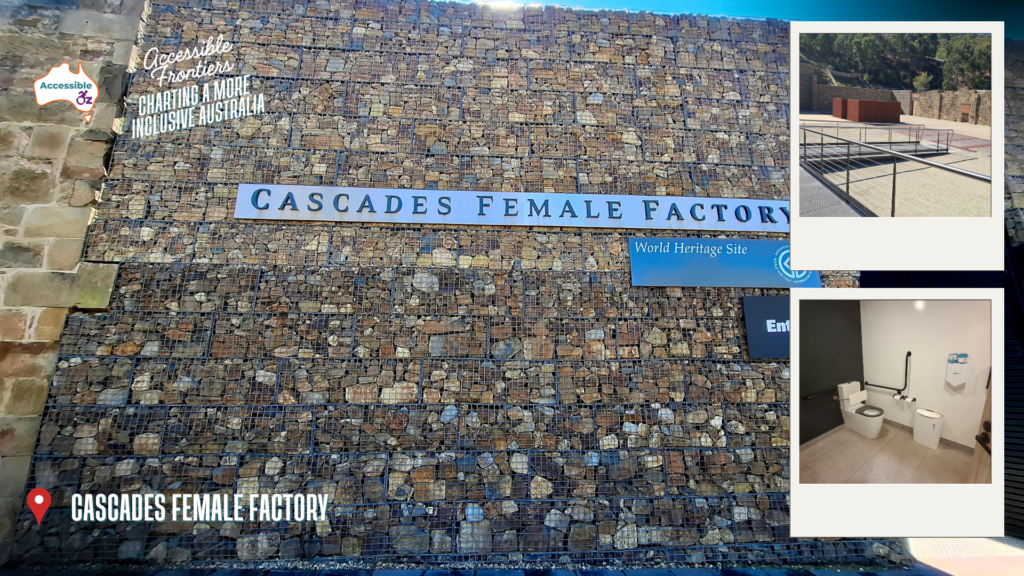
Tucked into the shadow of kunanyi/Mount Wellington in South Hobart, the Cascades Female Factory is one of the most significant sites in the UNESCO World Heritage-listed Australian Convict Sites collection. Operating between 1828 and 1856, it was designed to “reform” female convicts through labour, separation, and surveillance. Thousands of women and children passed through its gates, and the site now stands as a moving memorial to their suffering and resilience. You can wander the ruins of three original yards, step into the striking modern History and Interpretation Centre, and join immersive tours like “The Ship to Shore” that bring the women’s voices back to life.
Wheelchair Accessibility & Mobility Info
- The Interpretation Centre: fully accessible, including the exhibition spaces, gift shop, and accessible/ambulant bathrooms.
- The Grounds: mostly level, but the surface is primarily compacted and loose gravel, with some sandstone blocks and steel plates — expect to push a little harder.
- Tours: generally accessible with some assistance. Heritage doorways and gates can be narrow, but staff can open alternative wider entry points, such as the front gate off the public footpath.
- Seating: bench seating is available throughout the yards and tour assembly areas.
- Parking: no dedicated on-site car park, but a designated accessible parking space is available on Syme Street near the entrance.
Sam’s Notes
“Take note that there is no on-site parking!”
“The story-telling by the guide is very raw and emotional. But just to note there is not much left of the actual prison — just walls and the matron’s house.”
“Be sure to head to Cascade Brewery after – just a few minutes up the road!”
2. MONA (Museum of Old and New Art)
How does the world’s most provocative museum handle accessibility in its underground labyrinth?
A 20-minute drive or ferry ride north of Hobart, MONA is Australia’s largest private museum — a self-described “subversive adult Disneyland” built into a sandstone cliff on the Berriedale peninsula. It’s famous for unconventional architecture, world-class contemporary art, and an experience built on mystery rather than museum rules. Despite its labyrinthine, three-level underground design, it turns out to be one of the most accessible attractions in the state — as long as you know the logistics.
Wheelchair Accessibility: Navigating the “Void”
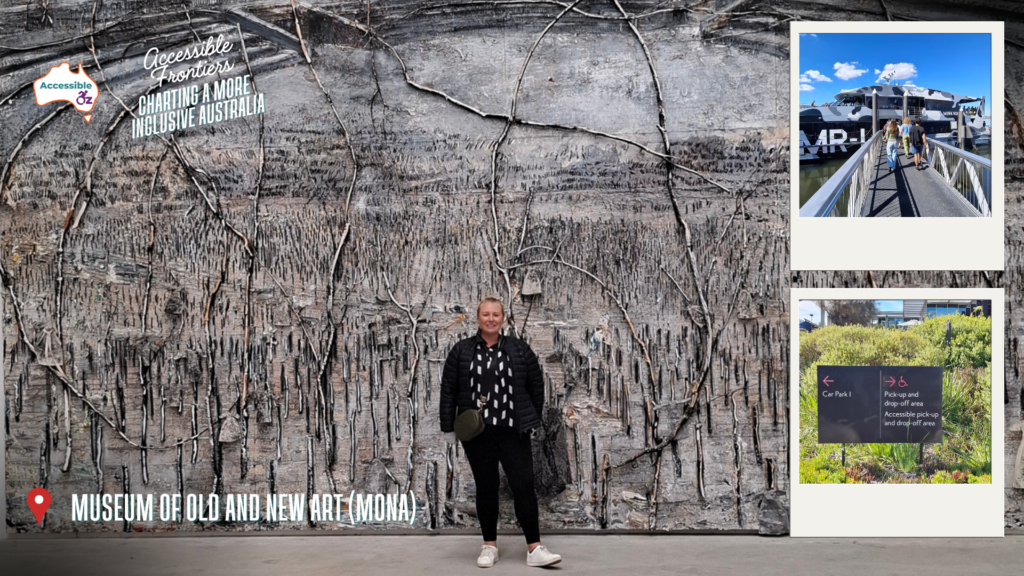
- The Ferry: the MONA Roma catamaran from Brooke Street Pier is fully accessible. There are 99 steps from the jetty to the entrance, but wheelchair users can bypass them via an accessible tunnel at the base of the stairs — just notify ferry staff during boarding so it can be opened on arrival.
- Driving: dedicated accessible parking is available in the top car park (about 300m from the entrance), plus a designated drop-off point closer to the doors.
- The Museum Layout: a grand glass elevator (“the Cylinder”) connects all three underground levels, and most galleries have wide, flat floors with step-free transitions.
- “The O” App: instead of wall labels, MONA’s proprietary app has an Accessibility mode that highlights the most efficient elevator routes and flags installations with sensory warnings.
- Onsite Amenities: accessible restrooms are on every floor, and free manual wheelchairs can be borrowed from the information desk (pre-booking recommended).
- Exclusion Note: a very small number of experimental installations have limited access, representing less than 5% of the total collection.
Sam’s Notes
“This place is amazing! Allow at least 4-5 hours here — you can break for lunch at one of the outside venues, and they even have a large stage with daily live musicians.”
“As it is underground, most of the space is dark with dim lighting, so it may not suit everyone.”
“I was given a 45-minute personalised ‘tactile’ tour of some of the art pieces where I was allowed to touch them (with gloves on). This would be great for blind, low vision or sensory guests. Must book ahead!”
“If you’re catching the ferry and have a car, note the nearby parking is only 2-hour limit — it may be best to drive there instead.”
3. Port Arthur Historic Site
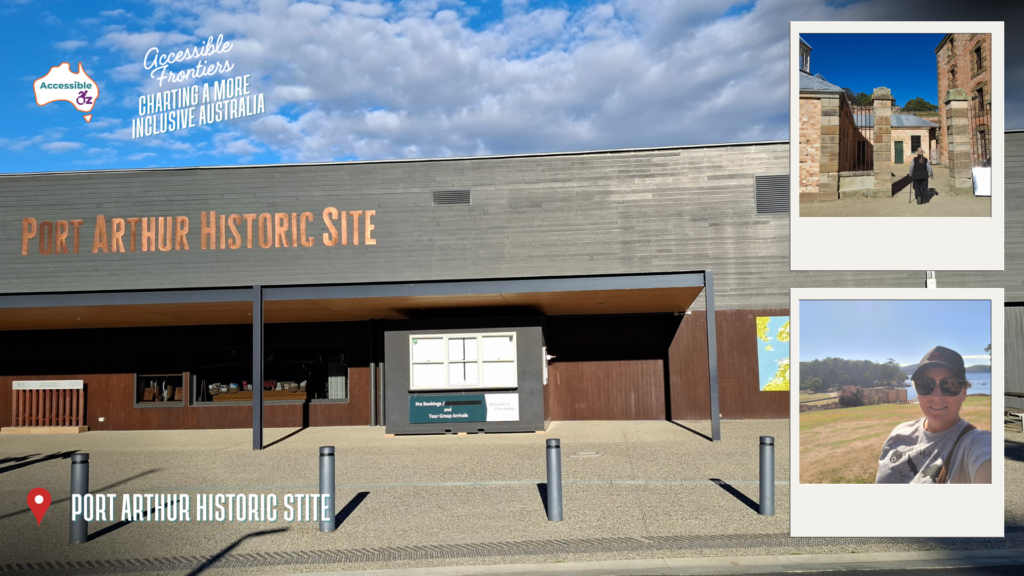
Navigating 100 acres of convict ruins sounds daunting, but Port Arthur has some of the best accessibility support in the state.
A UNESCO World Heritage site 90 minutes from Hobart, Port Arthur is Australia’s most intact and evocative convict settlement — over 100 acres of manicured gardens and stark sandstone ruins on the Tasman Peninsula. Whether you’re exploring the towering Penitentiary or the chilling Separate Prison, the site balances grim history with a genuinely beautiful natural backdrop. Despite being a 200-year-old site spread across a huge footprint, it’s surprisingly well set up for accessible touring.
Wheelchair Accessibility & Mobility Support
- The Visitor Centre: fully modern and accessible, with ramps, elevators, wide corridors, accessible restrooms, and dining at entry level.
- The Terrain: some paths are gravel or inclined, especially away from the waterfront toward the hilltop ruins, but the main thoroughfares are smooth and independent-access friendly.
- Courtesy Shuttle: a free golf-buggy service runs daily from 10:30am to 3:30pm, though users need to be able to transfer as these are standard buggies (staff will help stow wheelchairs).
- Accessible Tours: the included Harbour Cruise has a boarding ramp for wheelchair users, the Introductory walking tour follows a flat accessible route, and the Isle of the Dead tour is now partially accessible via a dedicated walkway (though some grades reach 1:8, so a support person is recommended).
- Parking & Loans: accessible parking sits right by the Visitor Centre, and free manual wheelchairs can be booked in advance from the ticketing desk.
- Companion Card: Port Arthur is a proud affiliate, offering free entry for an accompanying carer.
Sam’s Notes
“I would allow at least 4 hours to explore here. It is spread out and there is so much to see.”
“I would say at least 50% of the entire site is accessible. There are some steep grassy inclines towards the back, and some of the houses have steps with no ramps.”
“The boat is a great inclusion and I would highly recommend it — only a 20-minute ride — try the scallop pie while you’re on board with a glass of local wine!”
4. The Hobart Waterfront: Docks & Salamanca Market
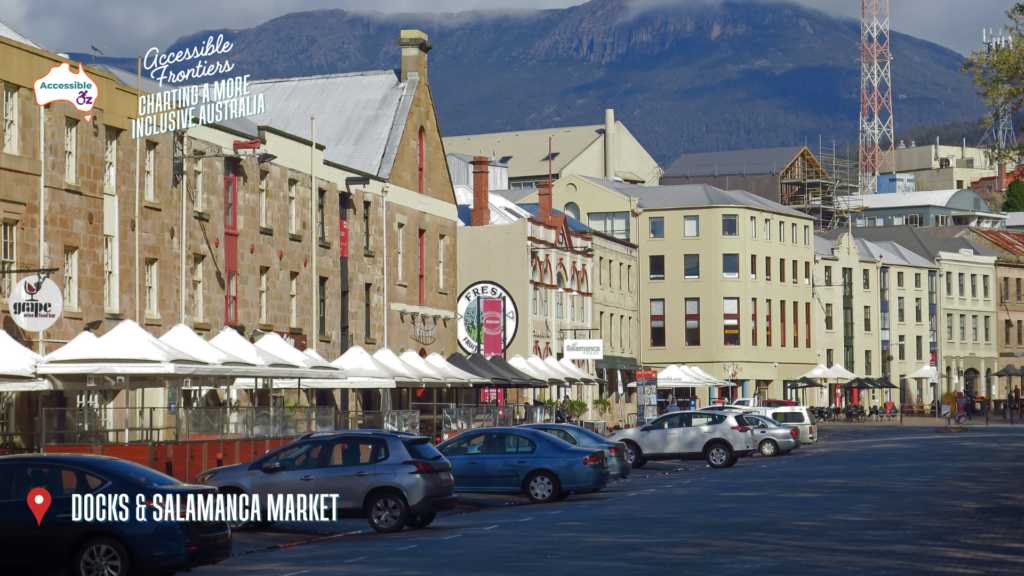
Checking out the historic docks and the iconic Salamanca Market.
No visit to Hobart is complete without a wander along the waterfront, and it’s one of the easiest precincts in the city to explore on wheels. Constitution Dock and Brooke Street Pier sit right on the water, flanked by the Georgian-era sandstone warehouses of Salamanca Place, which have been converted into galleries, restaurants, and bars. A short stroll around the corner brings you to Salamanca Square, and every Saturday the whole strip transforms into Salamanca Market — Tasmania’s most-visited attraction, with over 300 stalls of local produce, crafts, and street food.
Wheelchair Accessibility
- Salamanca Square: smooth, wide, level pavements make this one of the easiest spots in Hobart to get around. Most surrounding cafes and galleries are wheelchair-friendly, though a handful of the older sandstone buildings retain a small step at the entrance.
- Salamanca Market: the market itself caters for wheelchair users, and both wheelchair and mobility scooter hire are available on the day. The laneway does have some historic cobbling and can get very crowded by early afternoon, so an early arrival makes for much easier navigating.
- Parking: Salamanca Place itself closes to traffic for the market, but there are two large accessible parking areas on Castray Esplanade, on the water side of the strip.
- Facilities: accessible public toilets are available at Salamanca Square (in the main square and in the alcove off Wooby’s Lane), with handrails and button-press door access.
- Getting Around: the City of Hobart publishes a city-centre mobility map covering accessible parking, toilets, gradients, and rest spots across the wider CBD and waterfront — handy to have loaded before you set off.
It’s a genuinely relaxed, flat precinct to spend a morning in — grab a coffee by the water, roll along at your own pace, and if Saturday’s your day, get there early before the market crowds build.
5. Mount Wellington (kunanyi)
Can you get to the pinnacle on wheels?
Rising 1,271 metres straight up out of Hobart’s backyard, kunanyi/Mount Wellington is impossible to miss and even harder to resist. On a clear day the summit delivers 360-degree views over the city, the Derwent River, and out toward Bruny Island and the Tasman Peninsula. The good news for wheelchair users: you don’t need to hike a single step of it. The sealed Pinnacle Road runs all the way from Hobart’s CBD to the very top, suitable for conventional vehicles.
Wheelchair Accessibility
- Getting There by Road: Pinnacle Road is sealed the entire way and takes about 30 minutes to drive from the city, with accessible parking at the summit car park.
- kunanyi/Mt Wellington Explorer Bus: a wheelchair-accessible shuttle departs daily from Hobart’s waterfront and runs right to the summit, with stops at Fern Tree, The Springs, The Chalet, and Big Bend along the way — hop off to explore and catch a later bus back down.
- At the Summit: paved paths and ramps lead to the main viewing platforms, and there’s an enclosed observation shelter for protection from the wind and weather, making it wheelchair and pram friendly year-round.
- Check Before You Go: Pinnacle Road can close without notice in snow, ice, or extreme fire danger, so it’s worth checking the Wellington Park road status before heading up, especially outside summer.
- A Gentler Option: if the summit feels like a big trip, The Springs — partway up the mountain — has a café and its own lookout, so you can still take in the views without going all the way to the top.
It’s rare to find a mountain summit this accessible, and the payoff — that view over Hobart — makes it one of the easiest wins of the whole southern leg.
6. Where to Stay: Accessible Hobart Accommodation
Two central, thoroughly-audited bases to sleep off a big day of sightseeing.
Every attraction above is easy walking (or wheeling) distance from Hobart’s CBD, so where you stay matters. Here are two properties we’ve personally put through the accessibility wringer, both an easy stroll from Salamanca and the waterfront.
ibis Styles Hobart
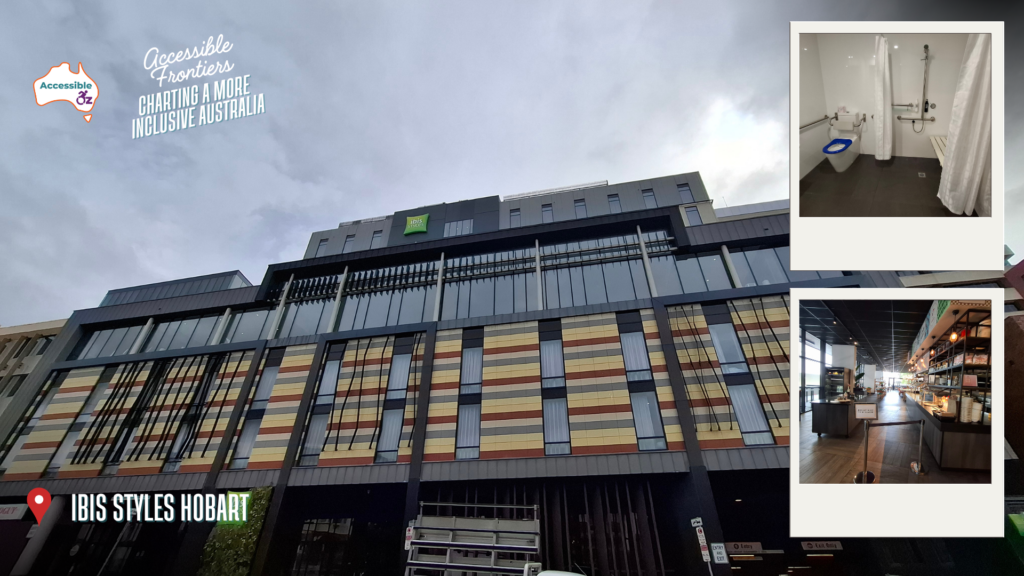
Located in the heart of the CBD at 173 Macquarie Street, ibis Styles Hobart is Tasmania’s largest hotel and a standout for travellers who want a modern, playful atmosphere without compromising on function. It’s a flat, 10-minute stroll from Salamanca Market and the waterfront, making it a great base for exploring the city’s food and harbour scene.
- Dedicated Accessible Rooms: King and Queen configurations offering a generous 22–25m², with ample turning circles for manual and electric wheelchairs.
- The Bathroom: a full roll-in (step-free) shower, sturdy grab rails, a wall-mounted folding shower seat, and lowered vanities.
- Room Features: lowered light switches and closet rods, easy-to-reach curtains, and visual/audible safety alarms.
- Hotel Facilities: step-free entrance and wide, modern lifts servicing all 11 floors. The pool is indoors, though there is no pool hoist.
- Dining: the onsite restaurant, Mr. Good Guy, is fully accessible and known for its vibrant Southeast Asian street food.
- Parking: secured, covered onsite parking ($23–$25/night, first-come first-served, not pre-bookable) includes dedicated accessible bays in the basement with a wheelchair-accessible path to the lifts. If the onsite lot is full, offsite parking is available about 200m away for around $17/night (7am–midnight only, versus 24-hour access onsite).
Sam’s Notes
“For a 3.5 star hotel I found this to be very modern and well styled. It is only 9 years old.”
“Great location and only a 10 min walk to the waterfront.”
The Old Woolstore Apartment Hotel
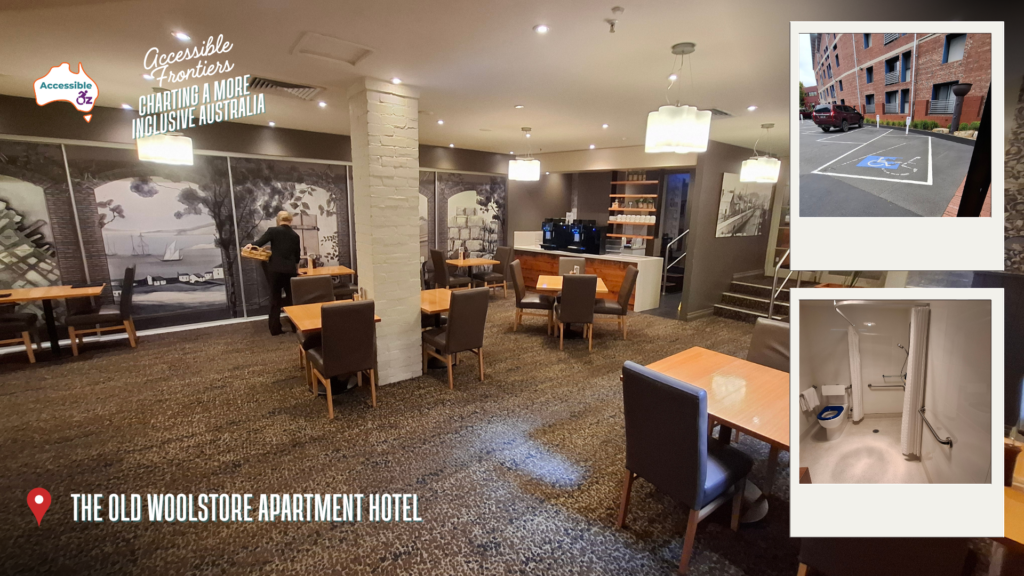
A multi-award-winning property just a stone’s throw from the waterfront and Salamanca Place, The Old Woolstore blends historic, heritage-listed charm with modern comfort, and is widely regarded as one of the most inclusive and accessible stays in Tasmania.
- Dedicated Accessible Rooms: modified Hotel Rooms and Studio Apartments with step-free access, extra-wide doorways (>81cm), roll-in showers with fixed grab bars and a free-standing shower chair, glide-under vanities, and accessible toilet seats with support rails.
- Hoist-Friendly Beds: standard bed clearance is 10cm, with bed chocks available on request to raise this to 15cm — compatible with most mobile hoists.
- Building Navigation: large elevators service all levels, with hallways wider than 91cm to accommodate power wheelchairs.
- On-Site Parking: dedicated accessible spaces (at least 2.4m wide) in a secure, undercover car park, with an accessible path directly to reception.
- Dining & Bar: both Stockmans Restaurant and The Baaa Bar are on the ground floor with level ramp access.
Sam’s Notes
“Good location, heritage listed.”
“The Studios have just been fitted with 2 electric recliner chairs, making it easier to get in and out of.”
“There are 5 studios and 2 hotel rooms. I would be inclined to put guests in a studio room as it offers more space, plus a kitchenette and a washer/dryer combo.”
“The hotel is about to go through a soft refurb.”